How-to

Enable Dictation on macOS

Four settings and one keyboard conflict. Every app-specific guide on this site assumes this page is done.

Last updated: 2026-08-29

macOS Dictation types at the cursor in any application. It is off by default, it lives in one settings pane, and the single most common reason it appears not to work is a shortcut collision rather than a broken microphone.

Turn it on

  1. Open System Settings from the Apple menu.
  2. Select Keyboard in the sidebar, then scroll to Dictation.
  3. Switch Dictation on. macOS asks you to confirm, and may download a language the first time.
  4. Open a text field anywhere and test before you go any further.

The shortcut, and the Globe key trap

The Dictation pane holds a Shortcut menu. The default is pressing the Fn key twice. On a keyboard where Fn is the Globe key, that same key has a second job: the Keyboard settings pane has a "Press Globe key to" menu, and if it is set to Show Emoji and Symbols or Change Input Source, pressing it twice opens the emoji picker instead of starting dictation. Dictation is on, the microphone works, and nothing happens.

  1. In System Settings → Keyboard, check the "Press Globe key to" menu at the top of the pane.
  2. Either set it to Start Dictation, or leave it and pick a different Dictation shortcut instead.
  3. The Shortcut menu in the Dictation section includes a Customise option, which lets you bind any modifier combination. Right Command pressed twice is a common choice because nothing else claims it.

Two settings worth changing while you are here

  • Microphone Source. It defaults to Automatic, which follows the system input device. If you use a headset or an audio interface, Automatic can hand dictation a device with no signal, which reads as dictation being broken. Pin it to the microphone you actually speak into.
  • Language. Dictation transcribes one language at a time. Add every language you use from the Language menu, then switch between them from the dictation indicator. Adding a language is not the same as selecting it.

Punctuation is spoken, not typed

System dictation writes the punctuation you say out loud. The commands that cover most writing are "comma", "period", "question mark", "new line", and "new paragraph". This is worth knowing before you use any of the app guides on this site, because "new line" and "new paragraph" are exactly what break dictation in Slack, Discord, Notion, and a Google Sheets cell. Each of those guides says what to do instead.

A hold-to-dictate hotkey on top

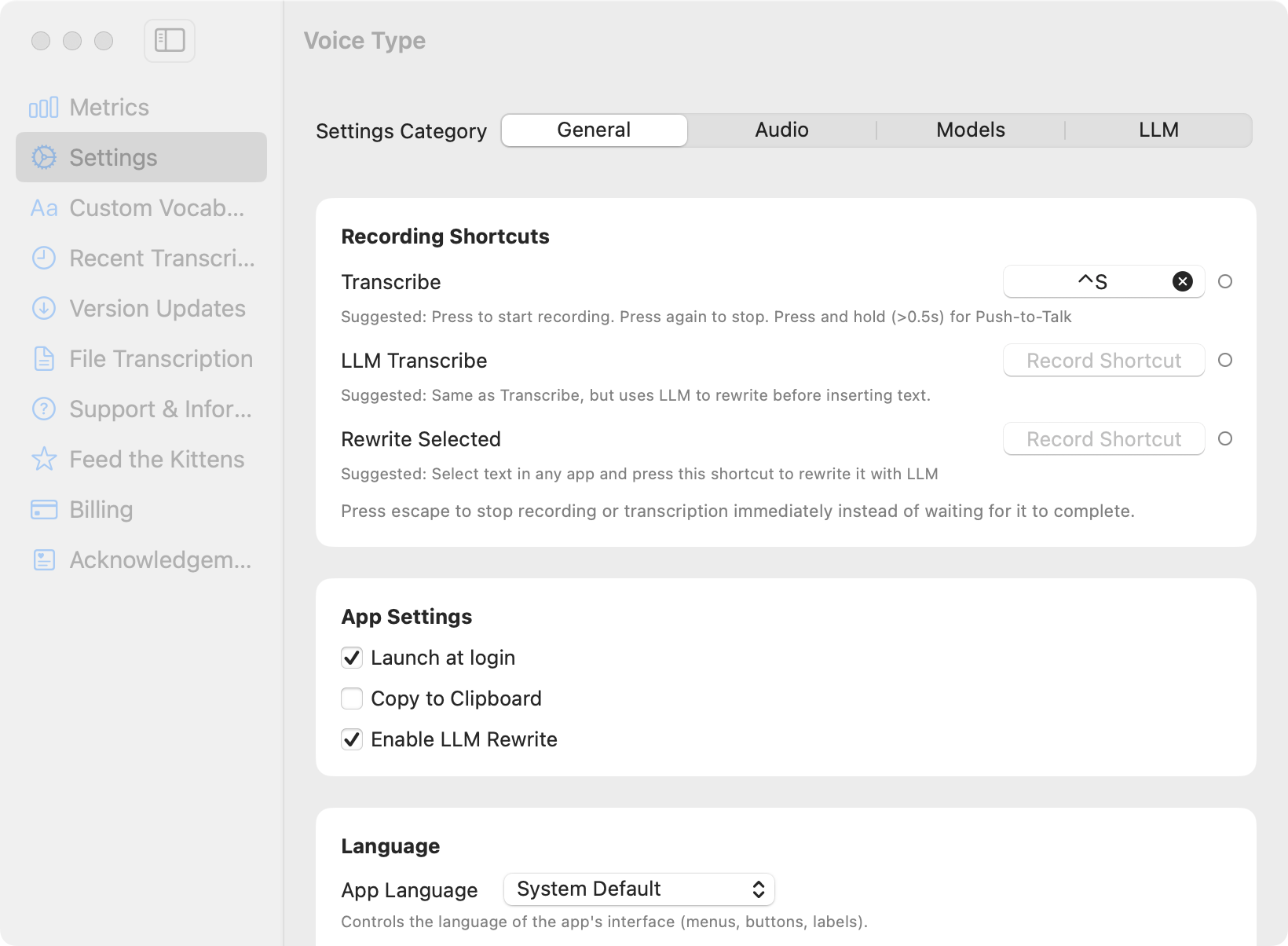
System dictation is a toggle: start it, speak, stop it. A hold-to-dictate hotkey is a different shape. You hold a key while speaking and the finished text is inserted when you let go, which removes the stop step and removes the spoken punctuation commands, because the punctuation is written from the audio. Voice Type runs the model on your Mac: voice typing for Mac.

The Voice Type window on macOS, showing Settings with the General tab selected. Under Recording Shortcuts, Transcribe is bound to Control S, with the note that pressing it starts recording, pressing again stops, and pressing and holding for more than 0.5 seconds is push to talk. LLM Transcribe and Rewrite Selected have no shortcut recorded. App Settings shows Launch at login and Enable LLM Rewrite checked, Copy to Clipboard unchecked, and App Language set to System Default.
The hold-to-dictate key is bound inside the app rather than in System Settings, so it does not have to share the Globe key. Screenshot of Voice Type on macOS, unretouched.

Next

Sources

Try Voice Type (7-day free trial)

Try it on your own work

Voice Type is on-device dictation for macOS. Hold a hotkey, speak, and release to insert text in any app. Your audio never leaves your Mac. Free for 7 days, then $19.99 once on the Mac App Store. No subscription and no account.

Start the free trial